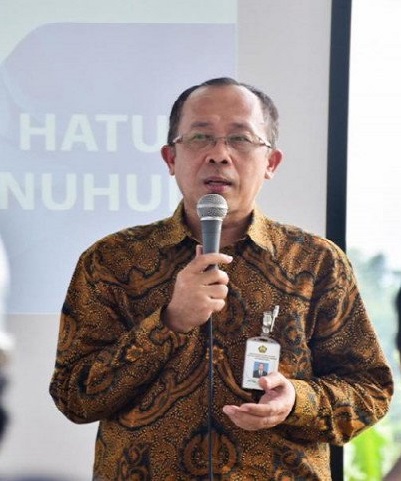
“Meanwhile we have a great opportunity and perhaps it could be as big as what is currently being developed by PLN, namely the potential demand that can be optimized. It means that apart from what PLN has planned, there must also be a potential that can be developed.
For example in North Kalimantan there is a very large potential for EBT if it is developed to reach 9,000 MW only by implementing a cash cap hydropower plant in one river flow, and the problem in Kaltara is that there is not enough demand to absorb that energy, so there needs to be a program that can integrate demand and supply.” Harris Yahya, EBTKE
New & Renewable Energy
Referring to data from the Geological Agency as of December 2019, geothermal resources in Indonesia reached 23,965.5 Megawatts (MW). Currently, Indonesia has 19 existing Geothermal Working Areas (WKPs), 45 new WKPs and 14 Assignment Areas for Preliminary Survey and Exploration (WPSPE).
Not more than a decade from now, Indonesia is projected to surpass the U.S. as the country with the largest geothermal utilization in the world. “The target is (to become the largest geothermal electricity producer in the world), hopefully it will be achieved,”
Ida Nuryatin Finahari | EBTKE
Meanwhile we have a great opportunity and maybe it could be as big as what is currently being developed by PLN, namely the potential demand that can be optimized. It means that apart from what PLN has planned, there must also be a potential that can be developed. For example in North Kalimantan there is a very large potential for EBT if it is developed to reach 9,000 MW only by implementing a cash cap hydropower plant in one river flow, and the problem in Kaltara is that there is not enough demand to absorb that energy, so there needs to be a program that can integrate demand and supply.
Harris Yahya | EBTKE
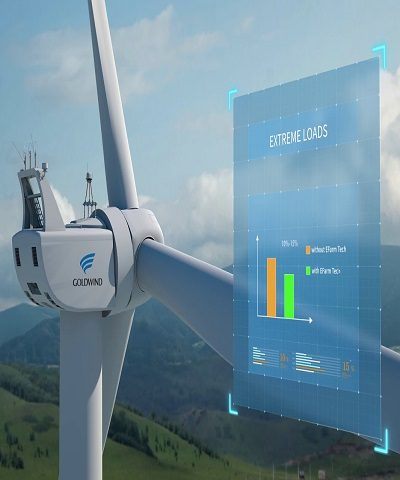
Earth receives 1.74 x 10 ^ 17 watts of solar power per hour and about 1-2% of it is converted into wind energy. This value is equivalent to 50 – 100 times the solar energy that all the plants on earth convert into biomass. Winds that can be used as wind energy are generally surface winds which are about 50 m high and have an average speed of about 20 km / hour. Earth receives 1.74 x 10 ^ 17 watts of solar power per hour and about 1-2% of it is converted into wind energy. This value is equivalent to 50 – 100 times the solar energy that all the plants on earth convert into biomass.